

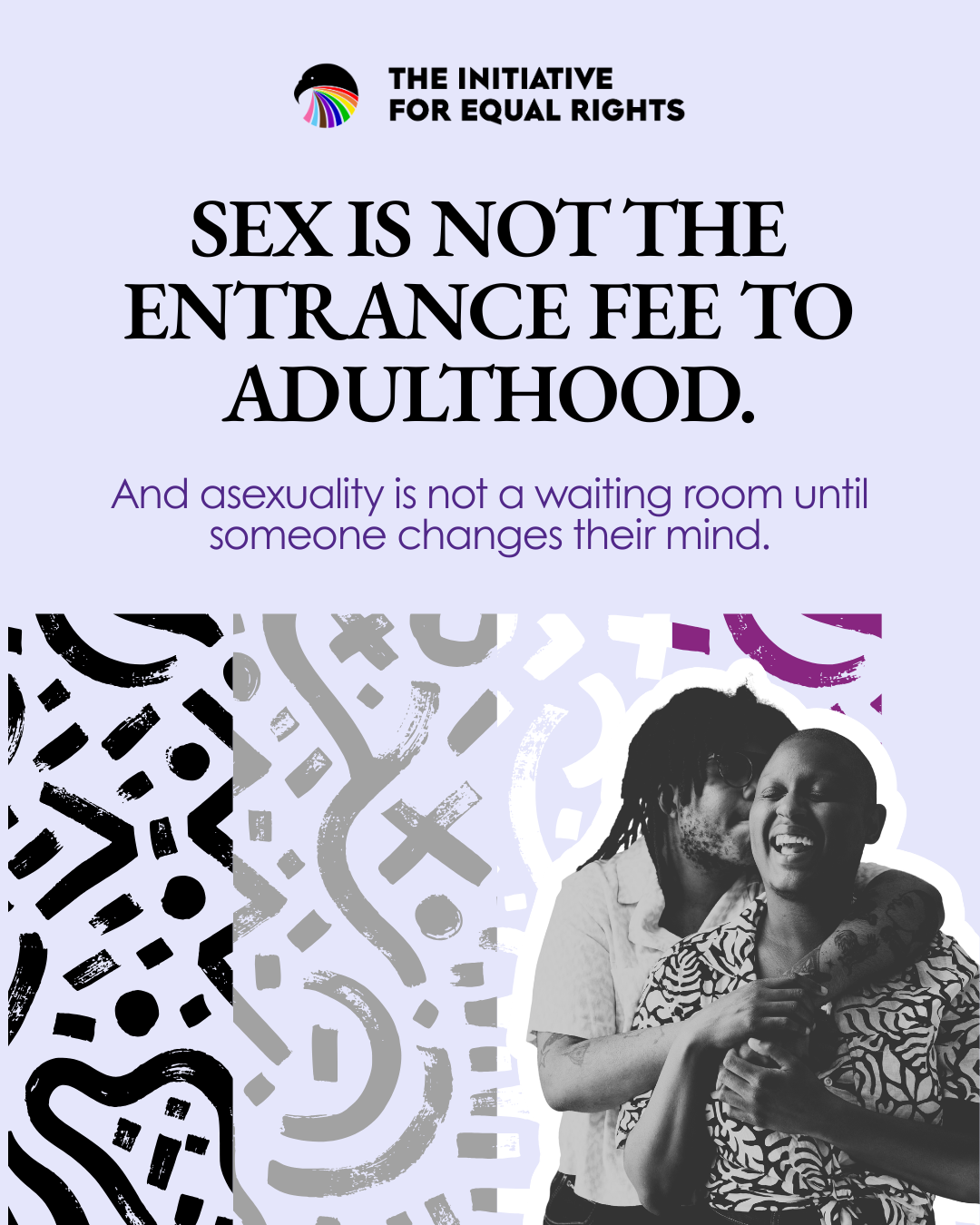
Imagine being told that one of the most personal parts of your life is something you have not figured out yet.
You know yourself. You understand your feelings. You have thought about what you want, what you do not want, and what makes you comfortable. Yet someone insists that you will change your mind once you meet the right person.
For many asexual people, this is a familiar experience. Asexuality is commonly understood as experiencing little or no sexual attraction. It is a diverse spectrum, and asexual people do not all experience relationships, romantic attraction, or intimacy in the same way. Some want romantic relationships; some do not. Some value physical affection; others have different boundaries. There is no single way to be asexual.
Yet a society that treats sexual attraction as universal can make these experiences difficult to explain. People may mistake asexuality for fear, immaturity, a medical problem, or a temporary phase. They may assume that a person who does not experience sexual attraction cannot experience love or build meaningful connections.
These assumptions reveal how narrowly we define intimacy and fulfilment.
We celebrate romantic relationships while overlooking friendships that sustain us. We treat sexual experience as a marker of maturity while ignoring the many other ways people develop confidence, responsibility, and emotional understanding. We sometimes speak as though a life without sex must be a life without connection.
But a fulfilling life can take many forms. It can be built through friendship, community, creativity, purpose, family, chosen family, romantic partnership, or solitude. It can include sex or not include sex. It can change over time or remain consistent. None of these possibilities makes a person’s life more or less legitimate.
Recognising asexuality is therefore about more than learning a new term. It is about challenging the assumption that everyone must experience attraction in the same way. It is about creating room for people to describe themselves without being dismissed, diagnosed by strangers, or pressured to prove their identities.
It also means understanding that respect is not conditional on whether we personally relate to someone’s experience.
You do not have to understand every detail of another person’s identity to respect their boundaries. You do not have to share someone’s experience to believe them when they describe it. And you do not have to see sex as unimportant in your own life to recognise that it is not essential to everyone else’s.
The message is simple: no one should have to justify their existence by meeting society’s expectations of intimacy.
As we reflect beyond International Asexuality Week, let us move beyond simply acknowledging asexual people and begin questioning the assumptions that make their experiences seem unusual in the first place.
At TIERs, inclusion means making space for the full diversity of human experiences, not asking people to fit into a narrow definition of what a meaningful life should look like.
Sex is an experience some people choose to have. It is not a qualification for adulthood, a measure of worth, or the price of being taken seriously.
Written by Love Francis
