Imagine this: you are a gender non-conforming person who visits a clinic, but somehow, in the form to be filled out, there are only two genders.

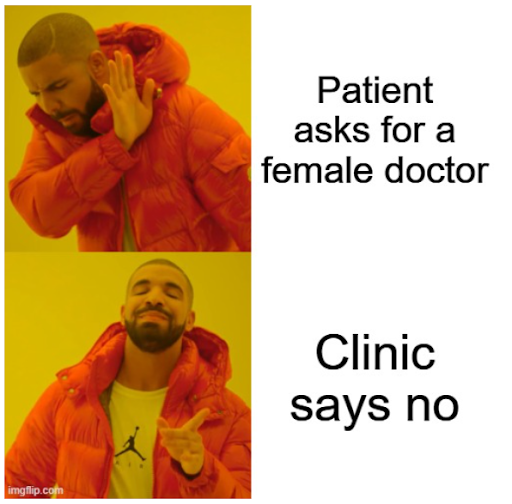
You have also requested that you would like to be attended to by a female doctor, but you were told that you don’t get to decide that.
When you finally meet the doctor, he takes one look at you and wants to know if you are male or female.

During his consultation, he keeps referring to your partner using the wrong pronoun, even after you corrected him.

Then, he wants to know your orientation, not because it’s medically relevant, but out of curiosity.

These are the issues gender non-conforming persons and sexual minorities face in relation to their sexual health. A straight person never has to worry about any of this. And that’s why it looks as if sexual and reproductive health is only for cisgender persons.
But that’s not the case; everybody has the right to access sexual and reproductive health
But what is SRHR? It is an abbreviation that stands for Sexual and Reproductive Health Rights, which is a right that allows every human, including sexual minorities and gender non-conforming persons, to access sexual and reproductive health with dignity and respect.
However, for years, SRHR has been centered around straight and cisgender women, leaving out sexual minorities and gender non-conforming people. This exclusion has caused the stigmatization and underrepresentation of sexual minorities and gender non-conforming persons. This stigma shows up in small ways, like a provider attributing an unrelated health issue to a patient’s sexual orientation or gender identity.
No one is asking for a new right or law; we’re simply asking for inclusion, dignity, and equal access for everyone. This is what that looks like in practice: at SRHR-affirming clinics, you choose your provider; no one decides that for you. Your orientation remains your choice to share when relevant, not something to satisfy someone’s curiosity. And the correct pronouns will be used to address you or your partner.
And if you’re wondering if there’s room for you to report any form of discrimination against you, yes, there is, because it’s your right to be treated with respect and dignity. To report, call the TIERs clinic helpline on +2348101256287.
Beyond clinics, part of claiming your SRHR is protecting yourself day to day. As a person, reclaiming your sexual and reproductive health starts with you. This includes using protection during sex, getting tested for HIV/STIs regularly, using clean toys, and more.
We have also prepared a document that details how to go about self-care for your sexual and reproductive health. It is titled Safer You. You can tap the link here to read it.
Remember, accessing sexual and reproductive health care isn’t a privilege; it is your right.
Written by Vivian Nwachukwu
Edited by Malakai Bassey